Journey Toward Wholeness: What is Holotropic Breathwork and its Therapeutic Potential?

Updated: May 8
Holotropic Breathwork is a powerful method of self-exploration and healing developed in the 1970s by the psychiatrist and co-founder of Transpersonal Psychology Dr. Stanislav Grof together with Christina Grof. It emerged from decades of clinical research with psychedelic-assisted psychotherapy, insights from depth psychology, and inspiration from ancient wisdom traditions such as yoga, meditation, and shamanic practices.
At the heart of this work lies a timeless understanding shared by many cultures: when human beings enter expanded states of consciousness in a safe and supportive environment, they can access profound inner resources—self-healing capacities, deep psychological insight, and a sense of connection with life itself.
The term holotropic comes from the Greek words holos (whole) and trepein (moving toward) and can be translated as “moving or turning toward wholeness.” Holotropic states of consciousness allow us to move beyond the limits of ordinary awareness and reconnect with the deeper intelligence of the psyche—an intelligence that naturally guides processes of healing, integration, and transformation.
Breath, Music, and Inner Experience
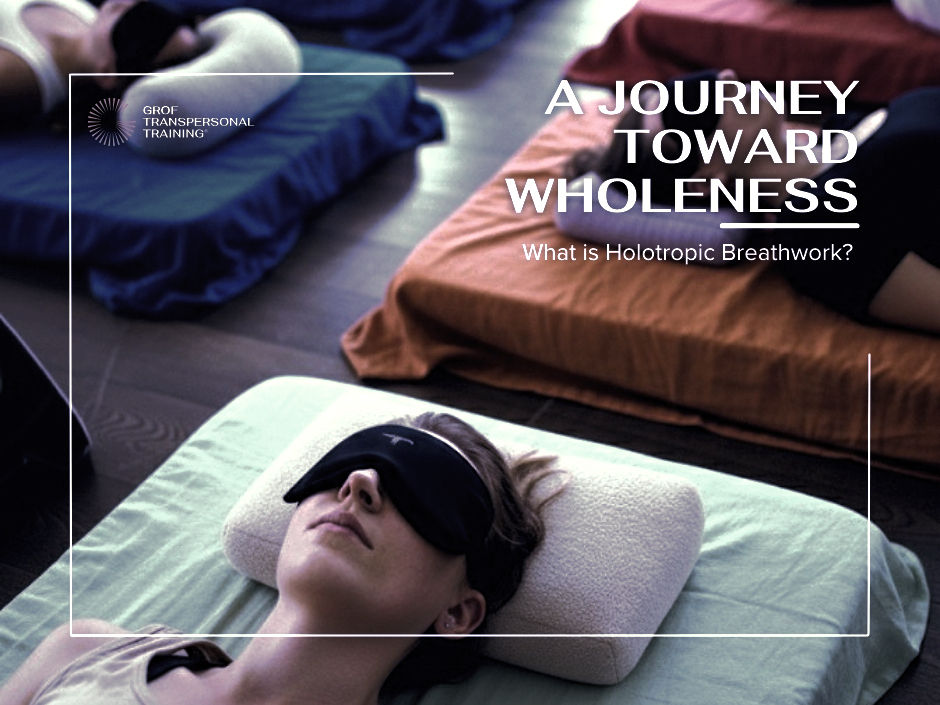
In Holotropic Breathwork, expanded states of consciousness are accessed through a combination of deeper breathing, evocative music, and a carefully held group setting. Within this supportive framework, participants embark on an inner journey guided not by external direction but by their own inner healing wisdom.
Experiences can unfold on many levels—physical, emotional, symbolic, or spiritual. Participants may encounter forgotten memories, deep emotional processes, vivid imagery, or profound insights about themselves and their lives.
These experiences often correspond to the three major experiential domains described by Stanislav Grof in his cartography of the psyche:
Biographical experiences related to personal life history
Perinatal experiences connected with the time in the womb and around birth
Transpersonal experiences that transcend the individual self and may include ancestral, archetypal, or mystical dimensions
Modern research in fields such as trauma studies, epigenetics, and prenatal psychology increasingly confirms that many of our experiences—personal as well as transgenerational—can be deeply imprinted in body and psyche. Holotropic Breathwork offers a unique way to access and integrate these layers of experience.
The Therapeutic Potential of Holotropic Breathwork
Although every journey is unique, participants frequently report significant psychological and emotional benefits. Holotropic Breathwork can help people:
release emotional and physical tension
process unresolved trauma or grief
transform limiting patterns and beliefs
reconnect with their body and emotions
deepen self-understanding and self-compassion
cultivate resilience and trust in life
Many participants describe a profound shift in their relationship to themselves and to the challenges of life. Difficult experiences are often met with greater acceptance, clarity, and inner strength. Life itself may begin to feel more vivid, meaningful, and connected.
At the same time, Holotropic Breathwork is not a quick fix or miracle cure. Transformation unfolds as a process that requires time, reflection, and integration. The breathwork sessions open the door, but the deeper changes emerge through continued awareness and integration in everyday life.
The Poetry of the Inner Journey
Beyond its therapeutic value, Holotropic Breathwork often touches a dimension of experience that many participants describe as deeply meaningful or sacred.
One participant wrote the following spontaneous lines after a session:
Suddenly within myself.
Who am I when all the masks disappear?
When I look at the world from within?
An unknown land opens
Wide and filled with love
— the authentic self.
Such moments capture something essential about this work: the sense of rediscovering an inner landscape that is both deeply personal and mysteriously universal.
Holotropic Breathwork reminds us that the psyche is not merely a collection of problems to be solved. It is also a living, creative, and self-organizing process that moves naturally toward wholeness when given the right conditions.
A Carefully Held Process
Holotropic Breathwork is always practiced in a carefully structured setting. Holotropic Breathwork workshops typically include three essential elements:
Preparation and introduction to the method and the inner process
Breathwork sessions, supported by music and a trained facilitation team
Integration practices, such as drawing, reflection, embodiment work, and group sharing
Participants work in pairs, alternating between the roles of breather and sitter, creating a supportive relational field within the group.
Facilitators are ensuring a safe space and provide support when needed and invited by the breathers. Support can be given verbally as well as physically through focused energy release. Holotropic Breathwork Facilitators should walk through a multi-year training that integrates psychology, trauma-informed practice, transpersonal theory, and experiential learning such as the international Grof Transpersonal Training® (GTT) program,
Entering the Adventure of Self-Discovery
Holotropic Breathwork invites us into what Stanislav Grof called “the adventure of self-discovery.” It offers a unique space where deep psychological work and the mystery of human consciousness meet.
For some participants, the journey begins with a desire to heal old wounds. For others, it arises from curiosity about the deeper dimensions of life and consciousness.
In either case, the breath can become a doorway—a doorway to healing, to insight, and to the quiet wonder of rediscovering the vast inner landscape of the human soul.


