Transpersonal Psychology: A Path to Deeper Self-Understanding

Updated: Apr 2
Transpersonal psychology offers a unique approach to understanding the self. It goes beyond traditional psychology by exploring the spiritual and transcendent aspects of human experience. This field encourages individuals to look deeper into their consciousness and connect with their higher selves.

What is Transpersonal Psychology?
Transpersonal psychology is a branch of psychology that integrates spiritual and transcendent experiences into the understanding of human behavior. It was developed in the 1960s and 1970s by psychologists like Abraham Maslow and Stanislav Grof. This approach emphasizes the importance of personal growth, self-actualization, and the exploration of consciousness.
Unlike traditional psychology, which often focuses on pathology and dysfunction, transpersonal psychology seeks to understand the whole person. It recognizes that individuals have the potential for growth and transformation. This perspective encourages people to explore their inner selves and connect with something greater than themselves.
Key Principles of Transpersonal Psychology
Transpersonal psychology is built on several key principles that guide its practice and understanding:
Holistic Approach: This field views individuals as whole beings, encompassing mind, body, and spirit. It recognizes that all aspects of a person are interconnected.
Spirituality: Transpersonal psychology acknowledges the role of spirituality in human experience. Not bound to any church or religion, it encourages individuals to explore their spiritual beliefs and practices.
Self-Actualization: The goal of transpersonal psychology is to help individuals reach their full potential. This involves personal growth, self-discovery, and the pursuit of meaning in life.
Transcendence: This principle focuses on experiences that go beyond the ordinary. It includes moments of insight, peak experiences, and expanded states of consciousness.
Integration: Transpersonal psychology emphasizes the importance of integrating such transcendent experiences into daily life. This helps individuals find balance and harmony.
History of Transpersonal Psychology
Transpersonal psychology emerged in the late 1960s as a disciplined expansion of psychological theory and clinical practice. It proposed that human development does not end with the formation of a stable ego, but may continue into stages characterized by expanded awareness, profound interconnectedness, and transformative states of consciousness.
Its intellectual foundations reach back to William James, who legitimized the study of mystical experience within psychology, and to Carl Gustav Jung, who recognized archetypal and transpersonal dimensions of the psyche as intrinsic aspects of human development. Alongside these figures, Roberto Assagioli, through his clinical and theoretical work in Psychosynthesis, developed a model explicitly oriented toward psychological-spiritual integration, while Sri Aurobindo, through his philosophical and contemplative writings, articulated an evolutionary vision of consciousness that deeply influenced later transpersonal perspectives.
Abraham Maslow further articulated self-transcendence and peak experiences as expressions of psychological health. A crucial environment for the emergence of this expanded vision was the Esalen Institute, which became an international center for experiential psychology and consciousness research. There, clinical experimentation, body-oriented approaches, meditation, and artistic exploration converged. The work of Fritz Perls and other experiential pioneers helped shift psychotherapy from interpretive models toward direct, embodied processes of transformation.
In parallel, Joseph Campbell, through his comparative study of mythology and his influential writings on the hero’s journey, provided a cultural and symbolic framework that helped contextualize transpersonal experiences within universal narrative patterns expressed in art, ritual, and storytelling. His work contributed to bridging psychology with the humanities, showing how transformative experiences are embedded in symbolic and cultural forms.
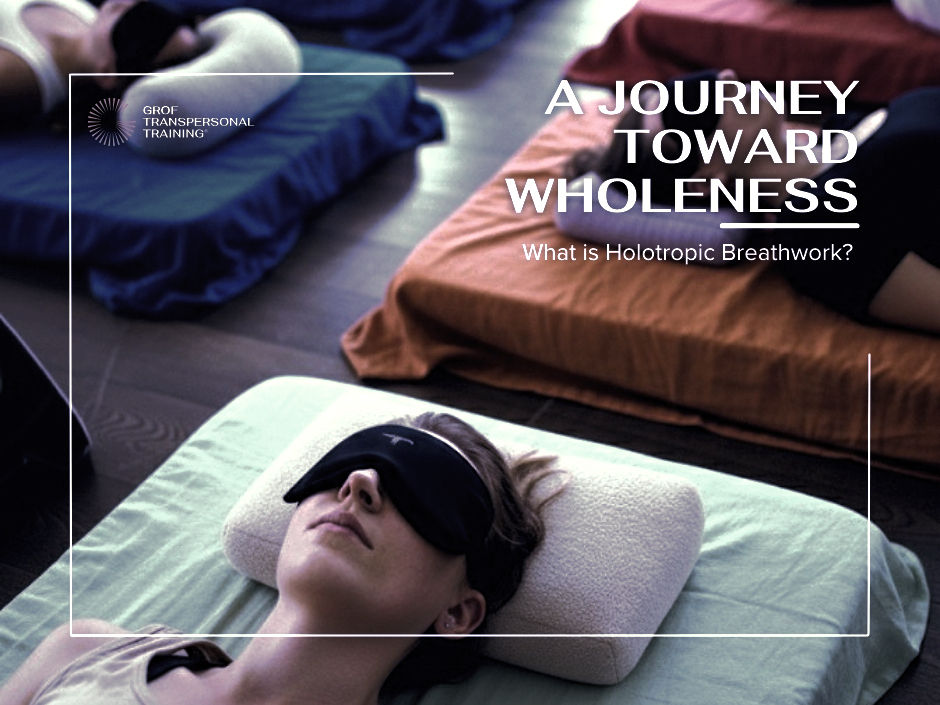
Among the central founders of transpersonal psychology was Stanislav Grof, whose clinical research with psychedelic-assisted psychotherapy and later development of Holotropic Breathwork significantly shaped the field. Grof’s work expanded the cartography of the psyche beyond biographical material to include perinatal and transpersonal dimensions, offering a systematic framework for understanding non-ordinary states of consciousness. His research demonstrated that such states can play a profound role in healing and psychological integration when approached with appropriate preparation and support.
In parallel to developments in the United States, important contributions emerged in Europe. The German psychiatrist Hanscarl Leuner developed Katathym Imaginative Psychotherapy, a clinically grounded method using guided imagery to access symbolic and emotional layers of the psyche. Alongside his therapeutic work, Leuner also contributed to the dissemination of transpersonal-oriented perspectives through early publications and professional networks in Europe.
In 1968, the discipline was formally established with the founding of the Association for Transpersonal Psychology and the launch of the Journal of Transpersonal Psychology, which became a key platform for the articulation and exchange of research, theory, and clinical practice in the field. From the beginning, transpersonal psychology developed as both a scientific and clinical discipline, rooted in lived experience as much as in conceptual reflection.
Research into expanded states of consciousness played a decisive role in shaping the field. The work of John C. Lilly on sensory isolation and altered states broadened scientific inquiry into the nature of consciousness, while Claudio Naranjo integrated psychedelic research, psychotherapy, and contemplative traditions into a coherent clinical and educational approach.
Women also played a significant role in the evolution of the field. Early contributors such as Sonja Margulies supported the development of transpersonal perspectives within psychotherapy and training contexts, while later figures such as Angeles Arrien expanded the field through cross-cultural research, integrating anthropology, symbolic systems, and indigenous wisdom traditions into both educational and experiential work.
A central clinical contribution of transpersonal psychology has been the careful differentiation between psychopathology and transformative crisis. Experiences of ego-dissolution can resemble psychosis, yet they may represent either regression or developmental breakthrough. Developmental models, including those articulated by Ken Wilber, emphasized the importance of distinguishing pre-egoic disintegration from trans-egoic emergence. This distinction has been especially important in the understanding of spiritual emergencies and in preventing the misdiagnosis of transformative experiences.
Within this framework, conventional psychotherapy and medication remain important tools, yet they may be used to stabilize and support integration rather than automatically suppress non-ordinary processes. Experiential methods—such as meditation, guided imagery, breath-based approaches, and historically psychedelic-assisted psychotherapy—have been explored as pathways to deeper layers of the psyche and enduring transformation.
The Holotropic Paradigm
Within this broader landscape, the Holotropic Paradigm developed by Stanislav and Christina Grof can be understood as a clinical and theoretical framework capable of integrating these diverse contributions. It brings together Jung’s archetypal psychology, Assagioli’s integrative model of the psyche, Aurobindo’s evolutionary vision of consciousness, Campbell’s symbolic understanding of transformative journeys, experiential approaches developed at Esalen, and cross-cultural perspectives on healing and initiation.
Rather than privileging a single model, the holotropic approach offers a unifying cartography in which biographical, perinatal, and transpersonal dimensions coexist within a dynamic process of transformation. In this context, non-ordinary states are understood not as anomalies but as essential expressions of the psyche’s self-healing intelligence. Holotropic Breathwork, as a central method, provides a structured and safe way to access these states, supporting both therapeutic work and the integration of unresolved or difficult experiences—including those emerging from psychedelic processes.
In this sense, the Holotropic Paradigm does not replace earlier contributions, but creates a framework in which their insights can be held together, clinically applied, and directly experienced.
Today, transpersonal psychology continues to evolve as a field that integrates rigorous clinical practice with a scientifically informed openness to expanded states of consciousness. Its historical significance lies in broadening the scope of psychology to include the spiritual dimension of human experience—an orientation that remains central to the work and training offered through Grof Transpersonal Training.
Selected Foundational References
Grof, S. (1985). Beyond the Brain: Birth, Death, and Transcendence in Psychotherapy. Albany, NY: SUNY Press.
Grof, S. (1975). Realms of the Human Unconscious: Observations from LSD Research. New York: Viking Press.
James, W. (1902). The Varieties of Religious Experience. New York: Longmans, Green & Co.
Jung, C. G. (1967). Symbols of Transformation. Princeton, NJ: Princeton University Press.
Maslow, A. H. (1972). The Farther Reaches of Human Nature. New York: Viking Press.
Naranjo, C. (1973). The Healing Journey: New Approaches to Consciousness. New York: Pantheon Books.
Wilber, K. (1990). Eye to Eye: The Quest for the New Paradigm. Boston: Shambhala.
Kasprow, M. C., & Scotton, B. W. (1999). A review of transpersonal theory and its application to psychotherapy.
Added sources:
Assagioli, R. (1965). Psychosynthesis. New York: Hobbs, Dorman & Co.
Aurobindo, S. (1940). The Life Divine. Pondicherry: Sri Aurobindo Ashram.
Leuner, H. (1969). Guided Affective Imagery. New York: Thieme.
Campbell, J. (1949). The Hero with a Thousand Faces. Princeton, NJ: Princeton University Press.
Arrien, A. (1993). The Four-Fold Way. San Francisco: Harper.
Additional references:
Margulies, S. (1976). Transpersonal Psychology: A Perspective. Journal of Transpersonal Psychology, 8(1), 1–12.